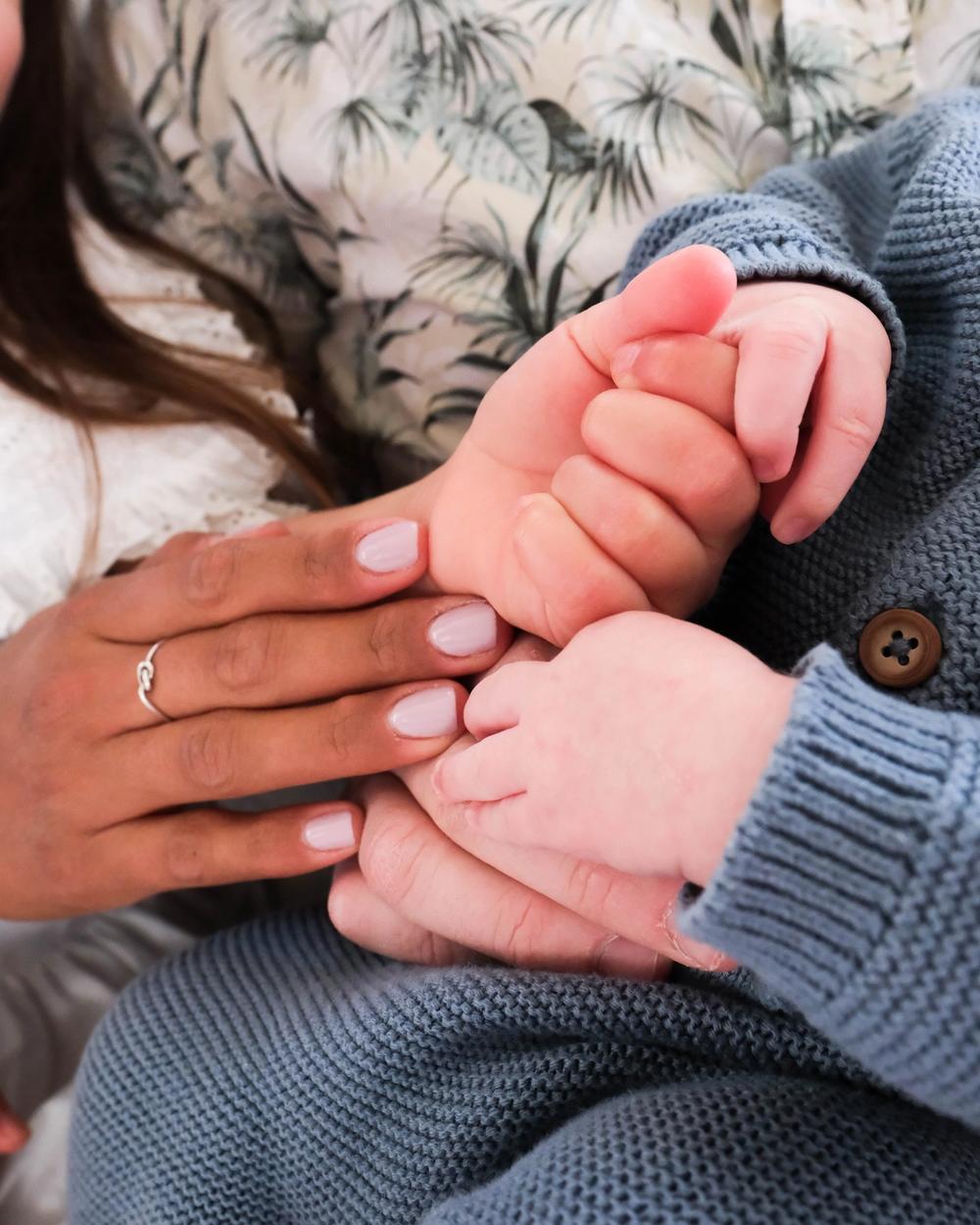
Family photos should be for everyone. And yet, for Deaf families, hard of hearing individuals, and families with children with special needs, finding a photographer who can actually communicate with them — and work with their kids — can be genuinely hard.
I want to change that.
My name is Christina Scheumack. I'm a CODA — a Child of Deaf Adults — and I've been fluent in American Sign Language my entire life. I also have extensive experience working with children with special needs. And I believe that every family, regardless of ability or communication style, deserves beautiful photos that look like them.
What it means to have an ASL-fluent photographer
When you hire a photographer who doesn't sign, a Deaf or hard of hearing client has to navigate the entire session through written notes, lip reading, or a third-party interpreter. That creates distance. It slows things down. And it makes it harder to capture the kind of natural, genuine moments that make family photos truly special.
When your photographer is fluent in ASL, everything changes. We can communicate directly — before, during, and after the session. I can give direction in your language, check in naturally, and build the kind of rapport that brings out real smiles and authentic connection. No interpreter needed. No awkward pauses. Just a real conversation between two people who understand each other.
If you're Deaf or hard of hearing, or if someone in your family is, please know that you are warmly and genuinely welcomed here. This is a space where ASL is not an accommodation — it's just how we talk.
What it means to have a photographer experienced with special needs
Every child is different. And children with special needs often have specific sensory sensitivities, communication styles, attention spans, and comfort levels that a standard photography session doesn't account for.
I work at your child's pace — not mine. If they need more time to warm up, we take it. If they need movement breaks, we build them in. If they communicate differently, I adapt. If they're having a hard day, we find the moments of joy anyway — because they're always there.
Some of my most treasured work has come from sessions that looked chaotic from the outside and produced something extraordinary. A child with autism who didn't want to look at the camera but had the most incredible expression when he was chasing a butterfly. A little girl with Down syndrome whose laugh could light up a room and did, in photo after photo. A nonverbal child whose connection with his dad was so palpable you didn't need a single word to feel it.
These are the sessions I remember most.
What to look for when hiring a photographer for a special needs child
If you're searching for a photographer for your child, here are the questions worth asking:
How do you typically work with kids who have sensory sensitivities? A good answer involves flexibility, patience, and a willingness to adapt — not a rigid schedule.
Have you worked with children with a specific diagnosis before? Experience matters, but openness and genuine curiosity matter just as much.
Can we do a shorter session or a trial run? For some children, a full-length session isn't realistic on the first try. A photographer who understands this and offers flexibility is a good sign.
Do you have a quiet location option? Busy parks with lots of stimulation aren't right for every child. Ask about lower-stimulus alternatives.
How do you handle meltdowns or difficult moments? The answer should be calm, experienced, and non-judgmental.
Locations that work well for sensory-sensitive sessions
For families with sensory-sensitive children, location matters as much as photographer. Here are some of my go-to spots in the Inland Empire for quieter, lower-stimulation sessions:
Etiwanda Preserve on a weekday morning — wide open, quiet, and beautiful. Neighborhood sessions at your own home or street — familiar environments reduce anxiety significantly. The lower trails of Cucamonga Peak — shaded, quiet, and rarely crowded on weekday mornings. The back areas of Cucamonga-Guasti Regional Park away from the main recreation areas.
I always discuss location options specifically based on your child's needs before booking. There's no one-size-fits-all answer.
You deserve photos that look like your family
Whatever your family looks like — whatever languages you speak, whatever abilities your children have, whatever makes your story uniquely yours — you deserve photos that capture it honestly and beautifully.
That's what I'm here to do.
If you're a Deaf or hard of hearing client, or if you have a child with special needs, I'd love to hear from you. Please reach out directly at hello@monsteralissome.com or through the contact form. Let's talk about what would make your session feel comfortable, joyful, and completely yours.
Frequently Asked Questions
Do I need to bring an interpreter for my session?
No — Christina is a fluent ASL signer and a CODA. You can communicate directly with her throughout the entire session in ASL. No interpreter needed.
How do you handle children who have sensory sensitivities?
Christina works at your child's pace, builds in breaks as needed, and chooses lower-stimulation locations when appropriate. Sessions are flexible and adapted to your child's specific needs on the day.
Can we do a shorter session for my child with special needs?
Absolutely. Christina offers flexible session lengths and can discuss a trial run if that would help your child feel more comfortable. Reach out to discuss what would work best for your family.
What locations do you recommend for sensory-sensitive children?
Weekday morning sessions at Etiwanda Preserve, home or neighborhood sessions, and the quieter areas of Cucamonga-Guasti Regional Park are all great options. Christina will discuss the best fit based on your child's specific needs.
Do you have experience with specific diagnoses?
Christina has worked with children with autism, Down syndrome, ADHD, sensory processing disorder, and more. Every child is different and she approaches each session with patience, flexibility, and genuine care.
Related reading
How to prepare kids for a photo session